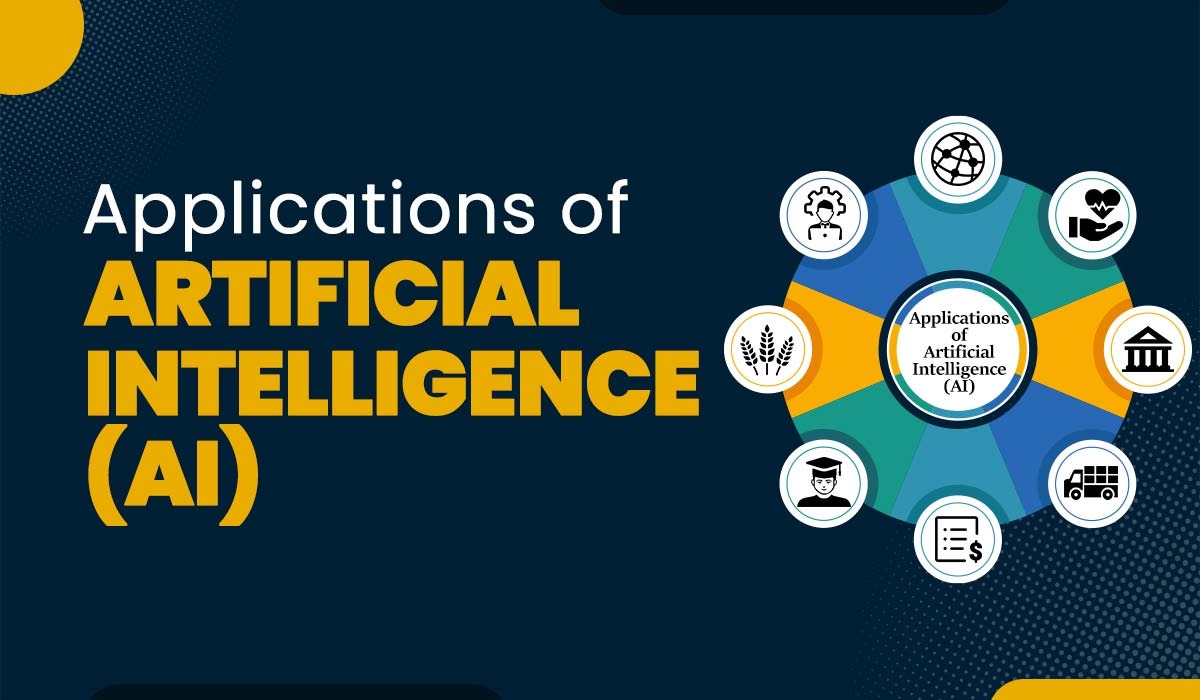
Artificial Intelligence has moved far beyond being an experimental technology. In 2026, AI is deeply integrated into everyday life, transforming industries, reshaping business models, and redefining how humans interact with technology. From healthcare diagnostics and financial security to education and smart automation, AI applications are becoming more accurate, accessible, and impactful.
According to insights shared by IBM Artificial Intelligence, organizations worldwide are rapidly adopting AI to improve efficiency, reduce costs, and deliver personalized experiences. Understanding the real-world applications of Artificial Intelligence in 2026 helps businesses stay competitive and allows learners to identify high-demand career paths.
This blog explores the top Artificial Intelligence applications in 2026, explaining how AI is being used across major industries and why these use cases matter.
Table of Contents
AI in Healthcare and Medical Diagnostics
Healthcare remains one of the most powerful areas of Artificial Intelligence adoption in 2026. AI-driven systems are now capable of analyzing medical images, predicting diseases, and supporting doctors in making accurate diagnoses.
According to World Health Organization digital health insights, AI-powered tools help detect conditions such as cancer, heart disease, and neurological disorders at early stages. Machine learning models trained on vast medical datasets can identify patterns that may be overlooked by humans.
AI is also used in personalized treatment planning, drug discovery, and remote patient monitoring. These applications improve patient outcomes while reducing the workload on healthcare professionals.
AI in Finance and Banking
Artificial Intelligence plays a critical role in the financial sector by enhancing security, efficiency, and customer experience. In 2026, AI-driven systems are widely used for fraud detection, credit scoring, algorithmic trading, and financial forecasting.
As explained in IBM AI for Financial Services, Machine Learning models can analyze millions of transactions in real time to identify suspicious behavior. This helps banks prevent fraud and protect customer data.
AI-powered chatbots and virtual assistants also provide instant customer support, improving service availability and reducing operational costs.
AI in Education and Personalized Learning
Education has been significantly transformed by Artificial Intelligence. In 2026, AI-powered learning platforms adapt content based on a student’s learning pace, strengths, and weaknesses.
According to UNESCO AI in education research, AI helps create inclusive and personalized learning environments. Intelligent tutoring systems provide real-time feedback, while automated grading tools save educators valuable time.
AI is also used to recommend learning paths, detect learning gaps, and support students with special needs, making education more accessible and effective.
AI in Cybersecurity and Threat Detection
With the rise of digital transformation, cybersecurity threats have become more complex. Artificial Intelligence is now a key defense mechanism against cyberattacks in 2026.
According to Cisco AI security research, AI-driven security systems analyze network behavior to detect anomalies and potential threats in real time. Unlike traditional security tools, AI systems continuously learn from new attack patterns.
AI is used to prevent phishing attacks, malware infections, and data breaches, helping organizations protect sensitive information and maintain trust.
AI in E-Commerce and Digital Marketing
Artificial Intelligence has revolutionized e-commerce and digital marketing by enabling highly personalized customer experiences. In 2026, AI systems analyze user behavior to recommend products, optimize pricing, and predict customer preferences.
As highlighted by Google AI for retail, recommendation engines powered by AI significantly increase conversion rates and customer satisfaction. Chatbots assist shoppers instantly, while AI-driven analytics help businesses understand market trends.
AI also plays a major role in targeted advertising, content optimization, and customer retention strategies.
AI in Autonomous Vehicles and Smart Transportation
Autonomous vehicles and smart transportation systems rely heavily on Artificial Intelligence. In 2026, AI-powered systems process data from sensors, cameras, and radar to enable safe navigation and decision-making.
According to NVIDIA Autonomous Vehicle AI, Deep Learning models help vehicles recognize objects, predict movement, and respond to real-time road conditions. AI is also used in traffic management systems to reduce congestion and improve public transport efficiency.
These innovations contribute to safer roads and more sustainable transportation solutions.
AI in Business Automation and Decision-Making
Businesses are increasingly using AI to automate repetitive tasks and support data-driven decision-making. In 2026, AI-powered tools handle customer support, document processing, supply chain optimization, and workforce management.
According to McKinsey AI business insights, organizations that adopt AI-driven automation gain a significant competitive advantage. AI systems analyze large datasets to identify trends, forecast demand, and optimize operations.
This allows businesses to focus on strategic growth rather than manual processes.
Career Opportunities in AI Applications
The expansion of AI applications has created strong demand for skilled professionals. Roles such as AI Engineer, Machine Learning Engineer, Data Scientist, and AI Product Manager are among the most in-demand careers.
Learning platforms like Coursera Artificial Intelligence programs and Khan Academy Computer Science offer structured pathways for building AI skills aligned with real-world applications.
Conclusion
In 2026, Artificial Intelligence is no longer a futuristic concept but a core technology driving innovation across industries. From healthcare and finance to education, cybersecurity, and transportation, AI applications are improving efficiency, accuracy, and user experience.
Understanding these real-world use cases helps businesses adopt AI strategically and enables learners to align their skills with industry needs. As AI continues to evolve, its applications will play an even greater role in shaping the future of technology and society.
Also Check How Machine Learning Works – Beginner Step-by-Step Guide 2026
1 thought on “Best Artificial Intelligence Applications – Guide 2026”